Where Does It All Begin? 🌱
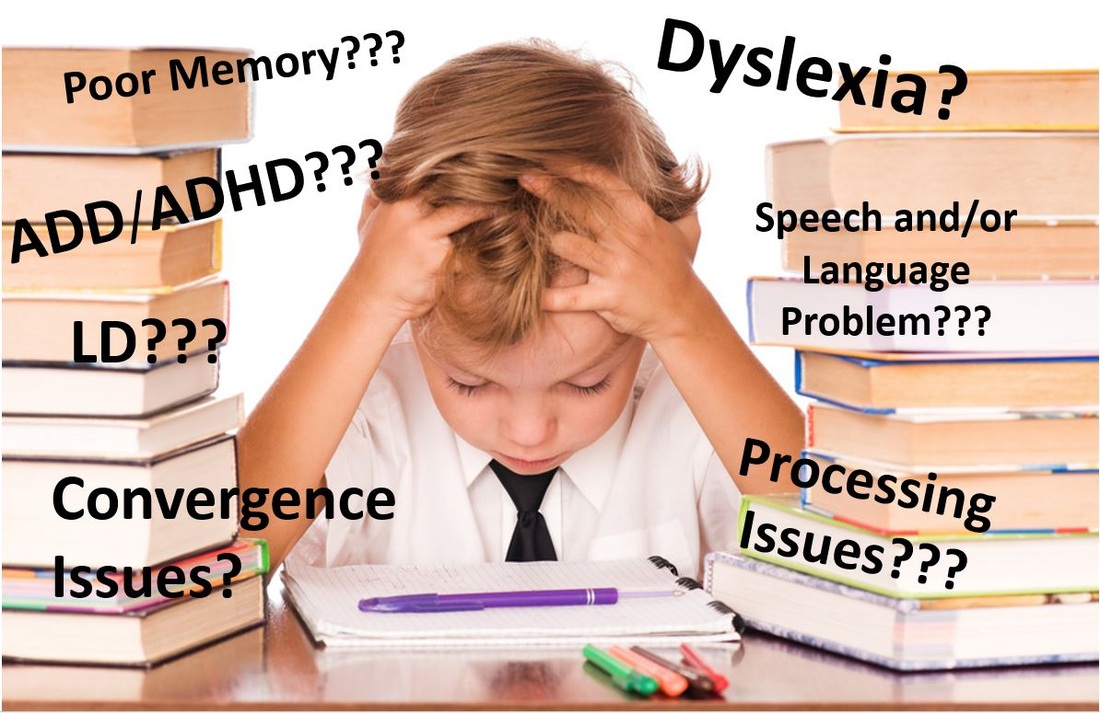
Raju is 9 years old. He is a bright, cheerful boy who loves drawing and can remember every cricket score. But when it comes to reading — he struggles. Letters seem to dance on the page. He reads 'was' as 'saw'. He writes 'b' instead of 'd'. His teacher tells his mother: 'Your son is lazy. He does not try hard enough.'
But Raju is not lazy. Raju has dyslexia — a learning disability that makes reading and writing difficult. And instead of getting support, he gets shame.
This is not just Raju's story. Across India, millions of children struggle silently in classrooms — not because they are not intelligent, but because the way they learn is different. And nobody around them understands this.
Today, in this blog, we will talk about learning disabilities — what they are, how they affect children and families, what parents and teachers can do, and how society needs to change its thinking.
Part 1: What Are Learning Disabilities? 🧠
It Is NOT About Intelligence
Learning disability is a condition in which the brain processes information differently. It has nothing to do with how smart a child is. In fact, many children with learning disabilities are very intelligent — they just learn in a different way.
Some common learning disabilities are:
- Dyslexia — difficulty in reading, writing, and spelling. Letters get mixed up. Reading takes much longer.
- Dyscalculia — difficulty in understanding numbers and mathematics. Simple addition feels confusing.
- Dysgraphia — difficulty in writing. Handwriting is very poor, thoughts are hard to put on paper.
- ADHD (Attention Deficit Hyperactivity Disorder) — difficulty in focusing, sitting still, or controlling impulses.
- Auditory Processing Disorder — the child hears properly but the brain struggles to make sense of what it hears.
- Visual Processing Disorder — difficulty understanding what the eyes see, like shapes, letters, or spatial distance.
"A child with a learning disability is not broken. Their brain is wired differently — and different does not mean less."
How Common Is This?
Studies suggest that 1 in every 5 children has some form of learning disability. In India, with over 250 million school-going children, that is a huge number — yet most of these children never get diagnosed, never get support, and often drop out of school believing they are 'not smart enough.'
Part 2: What Does the Family Go Through? 💔
When Nobody Believes You
The first pain of a parent is that nobody believes them. When a mother says 'My child tries hard but still cannot read,' the response from relatives, teachers, and even doctors is: 'Give it time.' 'Boys are slow.' 'Stop pampering.' 'Put the phone away and make them study.'
This denial wastes precious years. The earlier a learning disability is identified, the better the support can be given. But instead, children spend years feeling stupid, falling behind, and losing confidence.
The Emotional Damage Is Deep
Imagine going to school every day knowing you will fail. Knowing the teacher will call you slow. Knowing classmates will laugh when you cannot read aloud. This is the daily reality for a child with an undiagnosed learning disability.
These children often develop anxiety, depression, and extreme low self-esteem. Many refuse to go to school. Some become aggressive. Some become completely withdrawn. And all of this is not because of the learning disability itself — it is because of the lack of support and understanding around them.
"The child is not the problem. The system that refuses to understand them is the problem."
What Parents Feel
Parents of children with learning disabilities carry a weight that is invisible to the world. They attend parent-teacher meetings where they are told their child is 'not performing.' They spend nights helping with homework that should take 30 minutes but takes 3 hours. They watch their child cry with frustration over something other children do easily.
And they feel guilty. 'Did I do something wrong?' 'Is it my fault?' This guilt is completely unfounded — learning disabilities are neurological, not caused by bad parenting. But without proper information, parents suffer alone.
Part 3: Why Is India's System Failing These Children? 😓
- No Awareness, No Diagnosis
Most teachers in India are not trained to identify learning disabilities. A child who cannot read properly is labeled 'weak' or 'dull.' A child who cannot sit still is called 'undisciplined.' The concept that the brain can be wired differently — and that this requires a different teaching approach — is simply not part of most teachers' training.
Diagnosis requires a specialist — a psychologist or learning disability specialist. In government setups, these professionals barely exist. In private clinics, the cost of a full assessment can be Rs. 5,000 to Rs. 15,000 — completely out of reach for most families.
- Schools Are Not Equipped
Even if a child is diagnosed, most schools do not know what to do. There is no resource room, no special educator, no adjusted teaching method. The child is expected to sit in the same class, do the same tests, in the same way — and when they fail, it is their fault.
Private schools often deny admission to children with learning disabilities. Government schools are overcrowded and teachers are already stretched thin. The child falls through the cracks.
- Social Stigma Is Crushing
In Indian society, a child's academic performance is seen as a reflection of the family's intelligence and worth. A child who struggles in school brings 'shame' to the family. Parents are told by relatives: 'Get them checked by a psychiatrist' — said as an insult, not out of concern.
Children with learning disabilities are called 'pagal' (mad), 'gadha' (donkey), 'slow.' These words stick. They follow children into adulthood, damaging their sense of self for years.
"Labels given in childhood become the cages that hold adults back. We must choose our words with care."
- Girls Are Even More Invisible
Boys with learning disabilities are often seen as 'naughty' or 'hyperactive' — which at least gets them noticed. Girls tend to be quiet, so their struggles are overlooked entirely. A girl with dyslexia might sit quietly in class, failing silently, until she is pulled out of school or married off — with nobody ever understanding why she struggled.
Part 4: What Can Be Done — Practical Steps 🛠️
For Parents:
- Trust your instinct. If you feel something is different about how your child learns — pursue it. You know your child best.
- Get a proper assessment. Contact a child psychologist or learning disability specialist. NGOs like Ummeed, ADAPT, and Parivartan offer affordable or free assessments.
- Never say 'You are dumb' or 'Why can't you do this simple thing?' These words cause lasting damage. Instead say: 'Let's find a different way.'
- Find their strength and build on it. Children with learning disabilities often excel at art, music, sports, storytelling, or creative thinking. Nurture that.
- Connect with other parents. Support groups (many on WhatsApp and Facebook) give you practical tips and emotional strength.
- Learn about accommodations. Under the Rights of Persons with Disabilities (RPwD) Act 2016, children with learning disabilities are entitled to accommodations like extra time in exams, use of a scribe, and modified assessments. Know your rights.
For Teachers:
- Educate yourself. Read about dyslexia, dyscalculia, ADHD. Free resources are available from organizations like LDAI (Learning Disabilities Association of India).
- Never humiliate a struggling child in class. Reading aloud, solving problems on the blackboard — these should be optional for children who find them hard.
- Use multi-sensory teaching. Some children learn better by hearing, some by touching, some by seeing. Mix your methods.
- Give extra time. Many children with learning disabilities can do the work — they just need more time to process.
- Communicate with parents kindly. Instead of 'Your child is weak,' try 'I have noticed your child struggles with reading — let's work together to understand why.'
- Seat them wisely. Children with ADHD or processing difficulties do better at the front of the class, away from distractions.
For Schools and Principals:
- Hire or train at least one resource teacher for children with learning needs.
- Create an inclusive classroom culture where differences are celebrated, not mocked.
- Partner with local NGOs and child psychologists for screenings and parent workshops.
- Stop reducing a child's worth to their exam marks.
Part 5: Society's Role — What Can We All Do? 🌍
Stop Using Hurtful Labels
If you hear a child being called 'slow,' 'dull,' or 'stupid' — speak up. These words are not harmless. They shape how a child sees themselves for years. One adult standing up for a child can make an enormous difference.
Change the Conversation About Intelligence
Intelligence is not one thing. A child who cannot read well may be brilliant at building, designing, cooking, or connecting with people. Our society measures intelligence only through marks — and this narrow measurement is destroying countless children's futures.
Support Inclusive Events and Spaces
When schools, colleges, or communities celebrate academic achievers — also celebrate creative thinkers, problem-solvers, artists, and sportspeople. Make every child feel that their kind of intelligence matters.
What to Demand from the Government?
- Mandatory screening for learning disabilities in all government schools by Class 2.
- Training in learning disabilities for every teacher — at all government and private schools.
- At least one special educator in every government school.
- Free psychological assessment services at district level.
- Strict implementation of RPwD Act 2016 exam accommodations — extra time, scribes, separate rooms.
- Include learning disabilities in public health awareness campaigns.
"A nation that ignores 20% of its children's learning needs is not investing in education — it is investing in failure."
Part 6: Stories of Hope — Yes, It Gets Better! 🌟
From 'Dull' to Designer
Priya, from a small town in Uttar Pradesh, could never read properly in school. She was kept back in Class 4. Her teachers said she would never amount to anything. Her family considered stopping her education.
One day, a volunteer from an NGO visited her school and recognized the signs of dyslexia. She was assessed, supported, and taught using audio-visual methods. Her drawing talent was noticed and nurtured.
Today, Priya runs a small embroidery and design business from her home. She employs three other women. She still finds reading hard — but she found her path. And she found it because one person chose to see her differently.
"Every child is a story waiting to be understood. Our job is to read them — not with our eyes, but with our hearts."
Famous People with Learning Disabilities
Learning disabilities did not stop these people from changing the world:
- Albert Einstein — had significant reading and language difficulties
- Thomas Edison — was told by his teacher that he was 'too stupid to learn'
- Abhishek Bachchan — has spoken about his struggles with dyslexia
- Richard Branson — dyslexic, founder of Virgin Group
- Sundar Pichai — struggled with academics in early school years
Intelligence takes many forms. Our schools must learn to recognize all of them.
Resources Where Help Is Available 📞
- LDAI — Learning Disabilities Association of India — ldai.net
- Ummeed Child Development Centre — Mumbai — ummeed.org
- ADAPT (Able Disabled All People Together) — adapt.org.in
- Action for Autism — autism-india.org
- NIEPID — National Institute for Empowerment of Persons with Intellectual Disabilities — niepid.nic.in
- iCall Helpline (Tata Institute of Social Sciences) — 9152987821
- RPwD Act 2016 information — disabilityaffairs.gov.in
In the End — See Them, Hear Them, Believe Them 🤝
A child with a learning disability does not need pity. They do not need to be fixed. They need to be understood. They need a teacher who believes in them. A parent who does not give up. A school that makes room for them. A society that stops measuring worth in marks.
The next time a child is struggling in class — before calling them lazy or dull — pause. Ask: 'Is there another reason? Is there a different way I can help?'
Because every child who is written off is a dream that the world loses.
📚 They learn differently — not less. Let us build a world that makes room for every kind of mind.
— This blog is dedicated to every child who was told they were not smart enough — you were always enough. 🌸